
North Augusta Previous Residents Sources
Previous residents leave different kinds of evidence. The first decision is the parcel's county, since North Augusta crosses Aiken and Edgefield counties. Land records identify parties to a transaction, not everyone who lived there. Directories and census records add household context for the periods they cover. The best route is an evidence ladder, rather than a promise that one index names every past resident.
| Source | Years It Covers | Where Held | What It Shows |
|---|---|---|---|
| Aiken ROD records | From 1872 | Aiken ROD, office books, and SCDAH | Deeds, plats, parties, and legal-description trail |
| Edgefield land records | Deed Room from 1913; online most documents July 1, 1995 to present | Edgefield official records, Deed Room, archives | Recent online lead and older county chain |
| Historic conveyance books | Aiken 1872-1951; Edgefield 1786-1929 | SCDAH and Edgefield guides | Earlier ownership and legal descriptions |
| Augusta directories and census | Directory microfilm 1841-current; census microfilm 1820-1930 | Georgia Heritage Room | Address and household clues when the volume includes North Augusta |
| North Augusta Building Standards | No archive start year published | Department contact or a focused city FOIA request | Physical-change and permit-file dates |
Start at the newest record when the goal is a house history. For family history, a confirmed year, address, or probate event may make the directory or archive route more useful. Note: an owner on a parcel report is not proof that the owner occupied the property.
County Lines Shape Past Residents
North Augusta is an incorporated city in both Aiken and Edgefield counties. The City's GIS Services page links users to both county systems, and the City publishes an Aiken and Edgefield precinct map. A postal city name therefore does not choose the recorder, probate court, or archive. Capture the county and parcel identification before opening a deed index.
The county split is also a history clue. Aiken County was formed in 1871, while Edgefield's records reach much further back. A legal description may carry a trail across that boundary even though every later mailing address says North Augusta. The Edgefield County Archives has record-group guides and requests, but no universal every-name index. Use the guide for the relevant deed, probate, tax, or voter series.
County check first. A City GIS result or county parcel report is the practical starting point before a North Augusta previous residents search moves into deeds.
Aiken Deed Access Milestones
On the Aiken side, the Register of Deeds keeps records from 1872. Its public ROD Documents search is keyed by name or business and by book and page, not by street address. It is a useful lead after a property report supplies an owner name and legal description. The ROD says documents after June 12, 2005 are electronically imaged on office computers. That is an office-image milestone, not a stated web-index start date.
Older material remains in book form at the office. The ROD also identifies several categories that are not online, including powers of attorney, bankruptcy, mechanics liens, association liens, and state or federal tax liens and judgments. A prior-owner trail that stops online is not necessarily complete. The counter, the books, and SCDAH conveyance materials are the next channels.
Open the Aiken ROD name and book/page form after recording the owner spelling and parcel clues from the county report. Its two routes are visible in the official form.
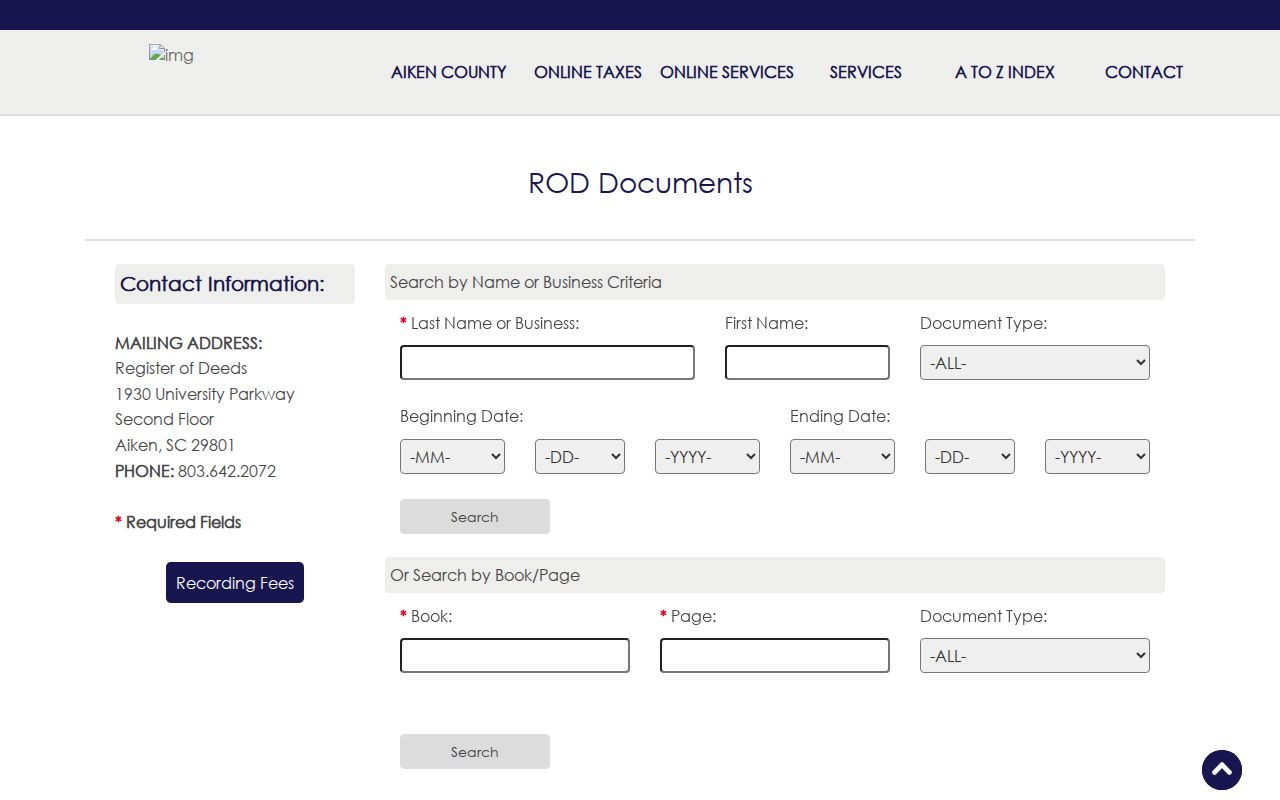
The form provides the party and book-page handoff needed to follow a deed reference backward without treating a street label as the whole history.
Follow North Augusta Past Owners
A deed chain follows land, not a name alone. Get the current parcel report, preserve the parcel ID and exact legal description, then find the purchase document for the listed owner. A deed normally names a grantor, the person or entity transferring an interest, and a grantee, the recipient. Each earlier purchase can lead to the next party in reverse order.
- Use the relevant county property search to record the parcel ID, property address, and legal description.
- Search the listed owner in the county recorder index and identify the purchase deed by its date and book-page or document reference.
- Compare the deed's legal description with the parcel report before recording the seller, or grantor, as a prior link.
- Search that prior party as a grantee to locate the earlier acquisition, keeping dates, parties, and references in order.
- When an index or image route ends, ask the recorder for book access, then use SCDAH or the Edgefield archive for the older era.
- Chain of title
- A sequence of recorded transfers used to follow interests in the same parcel.
- Legal description
- The lot, block, subdivision, survey, or other land wording that ties a deed to a parcel when street addresses change.
- Grantee
- The party receiving the interest shown in a deed.
- Plat
- A recorded map that can show lots, blocks, and subdivision layout.
Keep the date of execution distinct from the recording date. They can be different, and neither alone proves who lived at the address on that day.
Edgefield's Older Record Route
For an Edgefield-side parcel, use the official records portal after creating its free account. The portal states that most documents recorded from July 1, 1995 to the present can be searched online. The Edgefield Clerk of Court also serves as Register of Deeds, and its Deed Room dates from 1913. Certified copies require the office contact or a visit.
Earlier history has a different access path. SCDAH lists Edgefield conveyance books from 1786 to 1929 and probate estate papers from 1785 to 1939. The county archive spans 1785 through the late twentieth century and requires an appointment or research request. Its July 2026 registration notice says a $5 per-person registration applies. These channels matter when previous residents are tied to a parcel before Aiken County existed.
View the Edgefield official-records landing page before a recent-search session, since it explains the account requirement and online coverage.
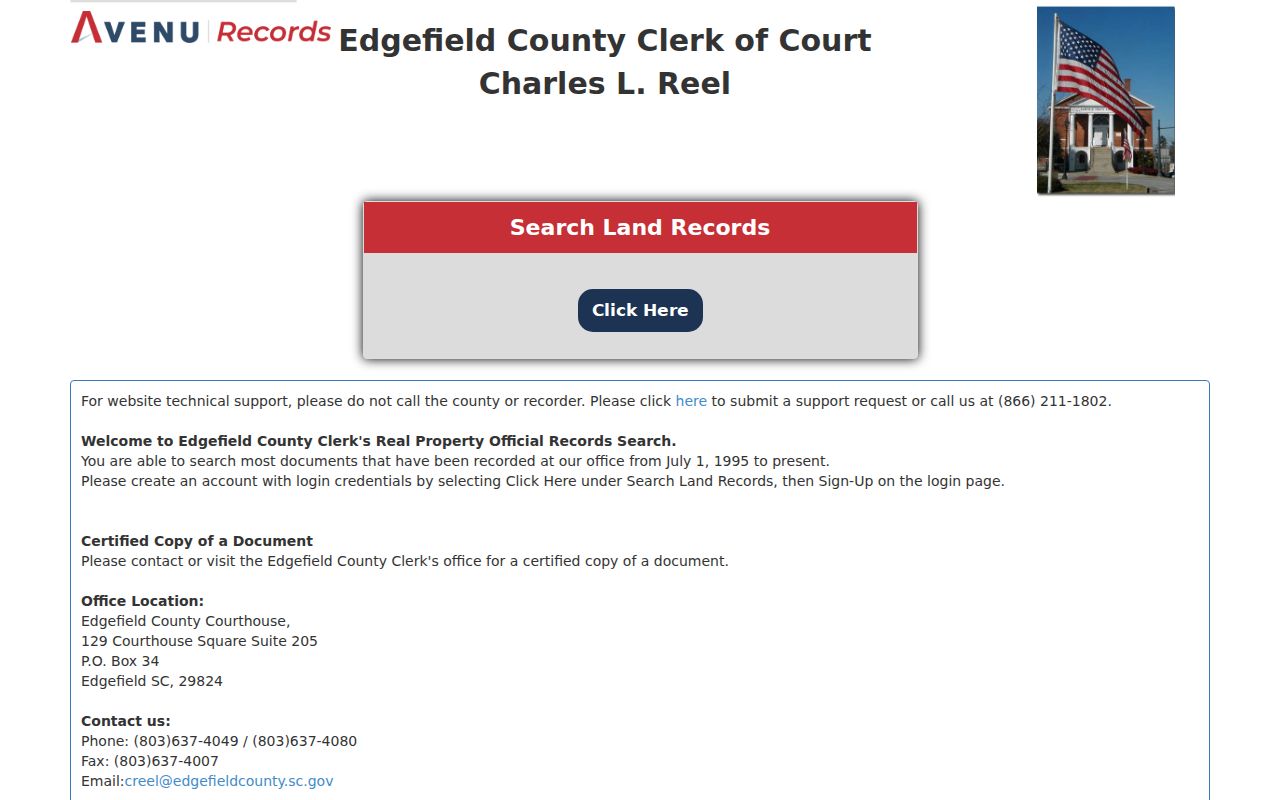
The county-specific access notice is a reminder to change systems when the parcel lies across the North Augusta county line.
Previous Residents in Directory Years
Ownership is one layer. For a household clue, the nearby historic directory collection is regional. The National Archives identifies Augusta volumes for 1929 and 1930 as including Hamburg and North Augusta. The Georgia Heritage Room reports Augusta City Directory microfilm from 1841 to current, a catalog for 1841-1939, and federal census microfilm from 1820 to 1930. A volume should be checked for North Augusta coverage before an entry is used.
The Georgia Heritage Room describes its local-history holdings and citation practice. Copy the exact spelling, volume, year, page, and column. Then compare the preceding and following available volume with the nearest released census. The household result can clarify a dated presence, but it should not be treated as a full list of all occupants. The collections themselves are described in the North Augusta Directory Book.
Open the National Archives directory list when choosing a North Augusta-related Augusta volume.
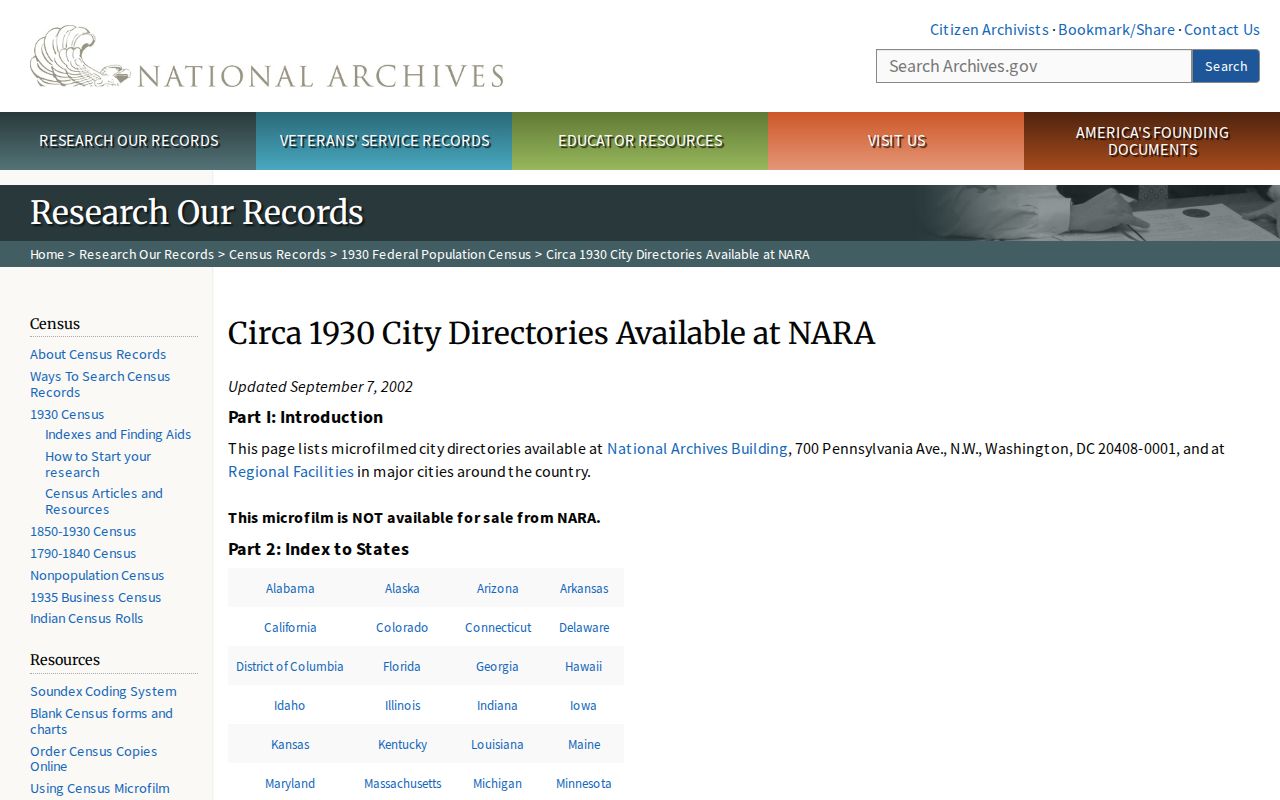
The list supplies a verified place-name bridge for 1929 and 1930, rather than an assumption that a city directory stops at the river.
Pair Records for House History
Directory and census work is strongest when it is tied back to land. Search the same street or person in adjacent directory years, then compare the address with a deed legal description, map, or census district. Do not assume that a changed street number proves a move. North Augusta research did not verify a citywide historic renumbering year, so continuity must be tested with records rather than guessed.
- Choose an Augusta directory year that may include North Augusta and transcribe the entry with its page and column.
- Check the previous and next available volume for the same initials, spouse notation, street, or business wording.
- Pair the entry with the closest released census and record the district or household facts as a separate source.
- Use the deed chain, subdivision language, and map context to decide whether the address evidence refers to the same parcel.
For a selected historic place, SCDAH also identifies a 1982 North Augusta survey with 70 sites, forms, photographs, a key map, and intensive-level tax maps. That survey can add building context, but it is not a resident roll.
Permits, Probate, and Cemetery Ends
When land records show a deceased owner or a physical change, a second local record can sharpen the date. North Augusta Building Standards has no verified public address-search database. Its permits page provides department contact and process information, so a written request should identify the address, date range, and existing file sought. A permit can date work on the structure but does not establish a complete resident history.
Probate is the stronger route for a transfer after death. Aiken Probate keeps estate and marriage records, while historic Aiken and Edgefield probate series are described by SCDAH. Sunset Hill Cemetery offers another local lead. The City keeps lot records and says a transfer may require a deed of distribution, will and letters testamentary, court order, or other listed title evidence. That record can connect a family to estate papers, but the City warns it is not a certification of title.
Review the City's Sunset Hill Cemetery procedure when a cemetery lot is part of a North Augusta family trail.
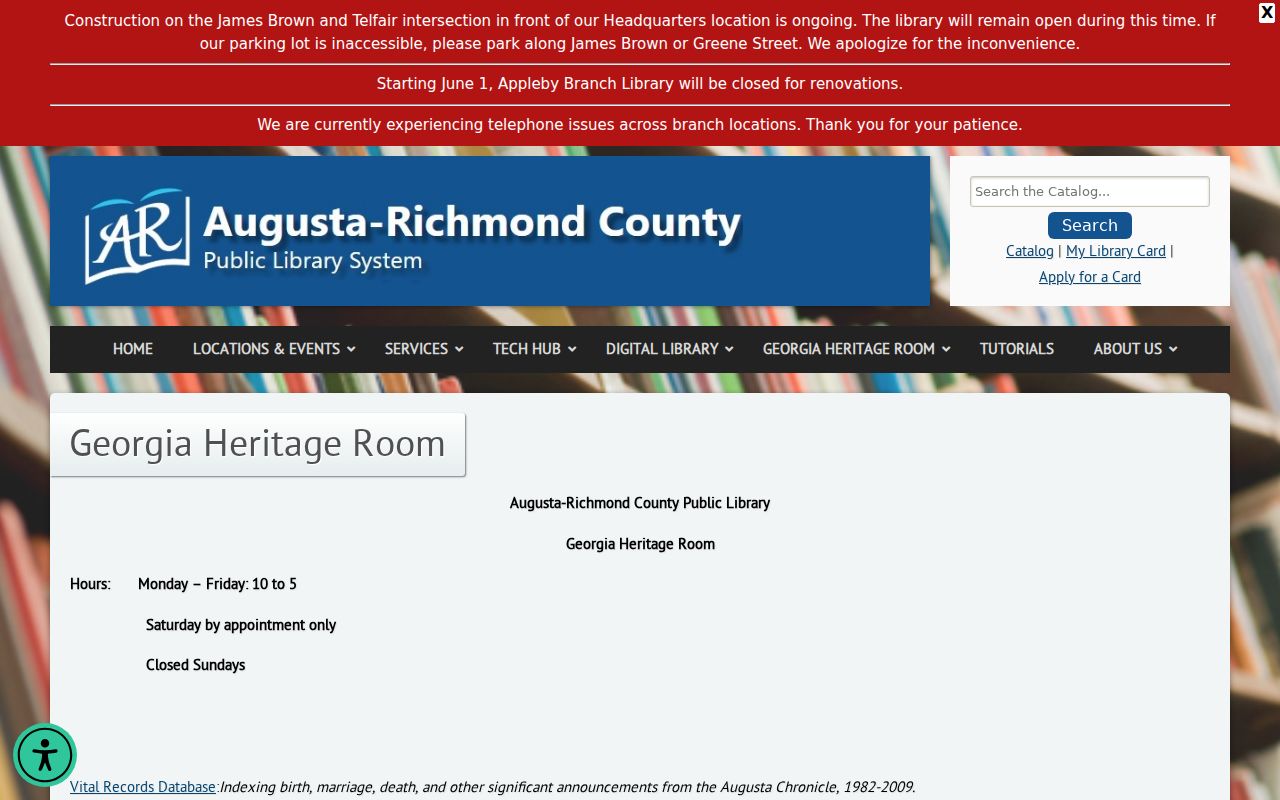
The Heritage Room combines directories, census microfilm, and newspaper microfilm, giving a dated household layer alongside a parcel history.
Lawful North Augusta House History
Previous residents research fits family history, estate work, and curiosity about a property's past. It does not make current households public. Parcel reports do not list all occupants, court records can be sealed or limited, and the South Carolina Address Confidentiality Program can require government offices to use a designated address for qualifying participants. The program does not erase old public records, but sensitive location information should not be republished.
Lawful use. Use North Augusta previous residents records for personal, historical, and estate questions. South Carolina law prohibits stalking and harassment, so do not use a past address trail to target or track a living person.
Note: confirm a deed, probate, or archive finding with the custodian before relying on it for a legal or title matter.