
Finding North Augusta Residents
A North Augusta residents directory search begins with the fact already in hand. Use a street address when the question is about land, an exact name when a recorded party is known, and a year when the goal is family history. The critical first check is county. North Augusta is incorporated in both Aiken and Edgefield counties, so a postal city name does not choose the assessor, deed office, probate court, or election office. The City routes map users to both county systems for that reason. Start in the North Augusta GIS services, identify the parcel's county, and keep that county with each later record.
Property reports identify a recorded owner and parcel facts. Deed indexes identify parties to a land transaction. Court and probate files can supply a dated connection to a case or estate. None is a complete household roll. An owner can differ from the person living at the situs address, and an old document may be accurate only for its own date. That is why a careful North Augusta residents directory trail uses more than one record before reaching a conclusion.
- Confirm whether the North Augusta address falls on the Aiken or Edgefield side of the city.
- Search the county property route by owner, address, parcel number, or legal description where those fields are offered.
- Save the parcel ID, situs address, legal description, and record date before opening a deed index.
- Compare the named deed party, party role, document reference, and legal description with the property record.
- Use court, probate, library, archive, or a precise records request only as a separate source of confirmation.
Note: A failed online search is a reason to use the counter, books, archive, or a specific request, not evidence that no record exists.
North Augusta's Two County Records
North Augusta's municipal boundary is the first geographic fact in any resident records search. The City's precinct map shows the Aiken and Edgefield county boundary, and a city annexation involved a country-club tract primarily in Edgefield with a smaller Aiken portion. A North Augusta mailing address or ZIP code therefore cannot select the land-record system. Use the parcel county, not the label on an envelope, for the correct tax account, register of deeds, probate chain, and county court route.
The split matters even more in older research. Aiken County was created in 1871 from parts of Edgefield, Orangeburg, Barnwell, and Lexington. An older North Augusta-area land trail may lead into predecessor-county material before it appears in an Aiken series. Keep the legal description, subdivision name, tax-map reference, and nearby roads with the address. Those details bridge a change in street formatting much better than a name alone.
North Augusta is a two-county city, not a two-county guess. The correct county opens the right record trail.
North Augusta Resident Records Offices
Three offices supply the basic official trail for many North Augusta resident questions. The county register or clerk records land documents, the assessor maintains the property report, and the county court or probate office holds its own case and estate material. Their records have different purposes. Begin with the office that holds the record, then use the other offices only to corroborate a date, party, or parcel. The address-focused sequence is covered in more depth in the North Augusta Street Directory.
Aiken County Register of Deeds
1930 University Parkway, Suite 2100
Aiken, SC 29801
803-642-2072
Aiken ROD Documents
Aiken Assessor and GeoServices
1930 University Parkway
Aiken, SC 29801
803-642-1583
Edgefield Clerk and Register of Deeds
129 Courthouse Square, Suite 205
Edgefield, SC 29824
803-637-4049
Aiken records date from 1872. Its office describes post-June 12, 2005 documents as electronically imaged on ROD office computers, while earlier documents are in book form. It also lists several document classes that are not online. Edgefield's Deed Room reaches back to 1913; its official online route describes most documents from July 1, 1995 to the present and requires a free account. A North Augusta query should switch systems when the parcel does.
North Augusta Property Record Fields
The Aiken property route is useful because county instructions identify four starting fields: owner name, address, parcel number, and legal description. After choosing a result, open the report and then its map link. A City FOIA example of an Aiken property card visibly distinguishes Owner Name, Parcel ID, Property Address, acreage, class, district, and Brief Tax Description. That separation matters. The property address is the land's physical location, while the legal description is the land language that ties deeds together. Neither field is a list of everyone who lives there.
| Search field | Format | Required | North Augusta use |
|---|---|---|---|
| Owner Name | Text | No | Find a recorded owner on an Aiken-side parcel. |
| Address | Text | No | Open a known North Augusta property report. |
| Parcel Number | Text | No | Return to one parcel after map work. |
| Legal Description | Text | No | Connect a report to older deed language. |
- Roll
- A record set maintained for a defined purpose, such as a county property roll. It does not necessarily name each resident.
- Index
- A finding tool that points to a document, party, book, page, or case. It is distinct from the underlying image or certified copy.
- Parcel
- The mapped unit of land used by the assessor. A parcel may have an owner without identifying its current household.
- Criss-cross directory
- A reverse directory organized by address rather than surname. Ask a library whether a relevant historical volume is available.
A parcel is the defined piece of land used in assessment and mapping. A situs address is its physical address. A legal description is the lot, block, subdivision, or survey wording used in land documents. Treat each as a separate North Augusta record field. A mailing address, if displayed in a live report, may not be the situs address and should not be assumed to identify current occupancy.
North Augusta Deed Index Routes
Once a North Augusta property report supplies an owner and legal description, the county deed index can test the land connection. The Aiken form has a name-or-business mode and a book/page mode. It accepts a required last name or business, an optional first name, optional document type and date range, plus numeric book and page fields in its second mode. Search a recorded owner as grantee, compare the resulting deed's legal description with the parcel report, then use the earlier grantor and reference for the next historical step.
The Aiken ROD Documents search exposes the two practical Aiken index routes: party name or book and page. The screen is a starting point, not a complete title file.
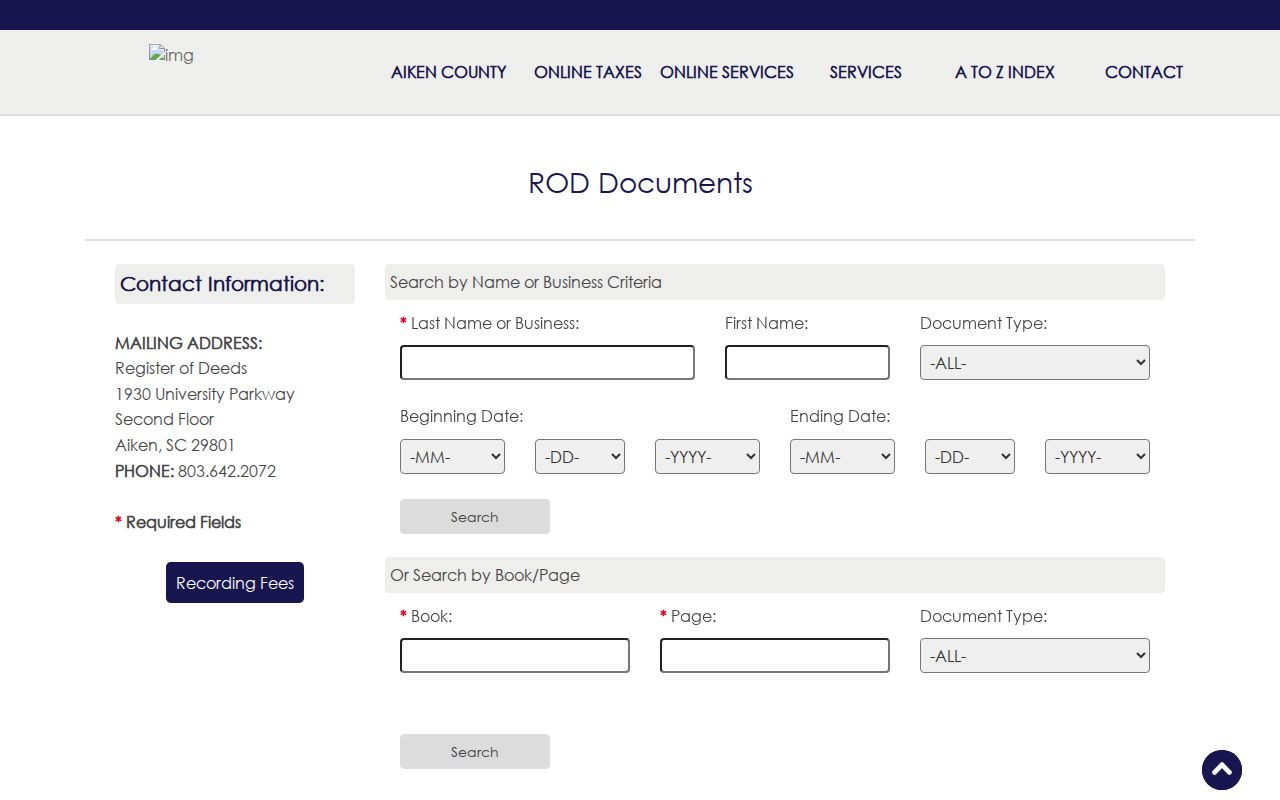
For North Augusta land research, record the document reference and legal description before moving to another deed or office. Older Aiken books and excluded online classes require the ROD counter or office computers. Edgefield-side history follows the Clerk and Register of Deeds, its free-account official-record route, the Deed Room, and archive collections rather than the Aiken index.
Note: An imaging date describes access at an office computer; it does not establish a full online-index start date.
North Augusta Court Record Checks
A court index is a useful North Augusta lead when it identifies a party, case number, action, or tax-map reference. It is not final proof of a current address or a complete file. The Aiken Trial Court Public Index supports filters for court type, agency, case number, case type, party name, party type, action, date type and date range. Civil searches can also use tax-map number ranges, lis pendens, judgments, and cross-index options. Start with one or two filters, then narrow only after confirming the county and case type.
The Aiken Trial Court Public Index is the online entry point for an Aiken-side county case search. Its result can lead to a case detail, actions, financial information where enabled, party roles, and sometimes document images.
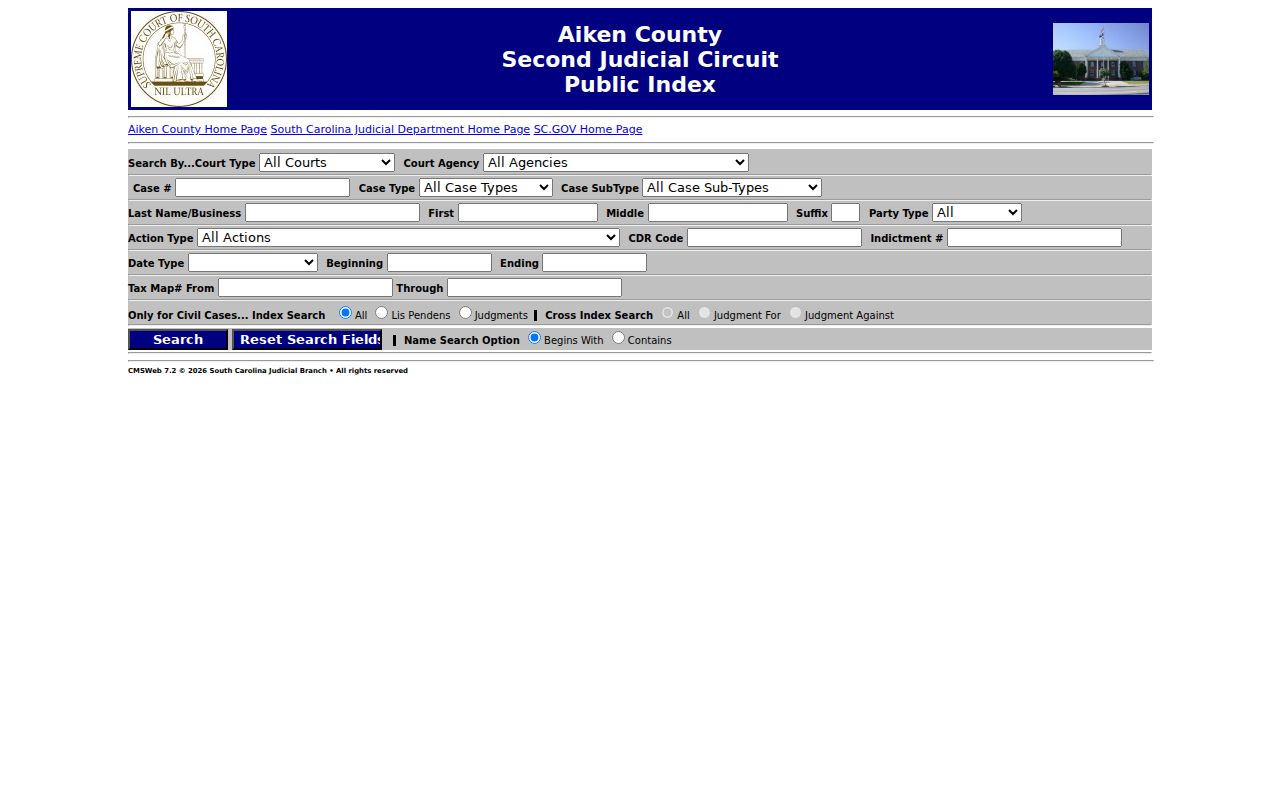
Sealed and confidential material is not public, and web images are not guaranteed. For an official file, certified copy, or material absent online, contact the county clerk. North Augusta Municipal Court handles city traffic, misdemeanor, ordinance, and environmental-code matters but does not publish a separate city name-search database. A municipal mailing address can reflect the address supplied on a ticket rather than a current residence.
Current North Augusta Resident Directories
Current North Augusta resident directories are really several narrow record systems. A property report is an ownership and parcel source. A recorded-document index identifies people or entities who signed or received a land document. A court index identifies a case party. The voter system is designed for an individual's own information, not a public street browser. Use the source whose scope matches the question, and preserve the date attached to each result.
| North Augusta source | What it may identify | Custodian | Access route |
|---|---|---|---|
| County property report | Recorded owner, parcel, and situs data | Aiken or Edgefield assessor | County property search or assessor counter |
| Recorded documents | Deed, plat, mortgage, easement, or other party | County ROD or clerk | Index, office books, terminal, or copies |
| Trial court index | Named party and docket lead | County clerk and state judiciary | Public Index and clerk confirmation |
| Probate estate file | Representative or interested party in an accessible filing | County Probate Court | Counter, phone, forms, or historic archive |
| Cemetery lot record | Lot purchaser or recorded transfer history | North Augusta City Clerk | City Clerk or cemetery assistance |
Official rolls generally state their custodian, date, and limits. A commercial people-finder category can merge old or mismatched data and may omit the document needed to check it. For a personal, lawful question, an official record is the better starting point because it points back to the office that can correct or supply the underlying file.
| Source type | Strength | Limit |
|---|---|---|
| Official county or state record | Named custodian, defined purpose, and counter fallback | May be limited by date, county, confidentiality, or access rule |
| Commercial people-finder category | May offer a broad lead | Can be stale, mismatched, incomplete, or detached from the source record |
North Augusta Voter Record Limits
MySCVotes is not a North Augusta resident list. It is an authenticated route for a person's own voter information. The form asks for county, first name, last name, date of birth in month/day/year format, and the last four digits of the person's Social Security number. South Carolina does not register voters by party. A mismatch should be handled through the correct county elections office, not treated as proof that a person is absent from North Augusta.
The MySCVotes sign-in requires all five fields: County is a dropdown, First Name and Last Name are text fields, Date of Birth uses month/day/year text, and SSN Last 4 is masked numeric text. The Login button opens authenticated voter information. These exact fields visibly separate a personal account from a public directory search.
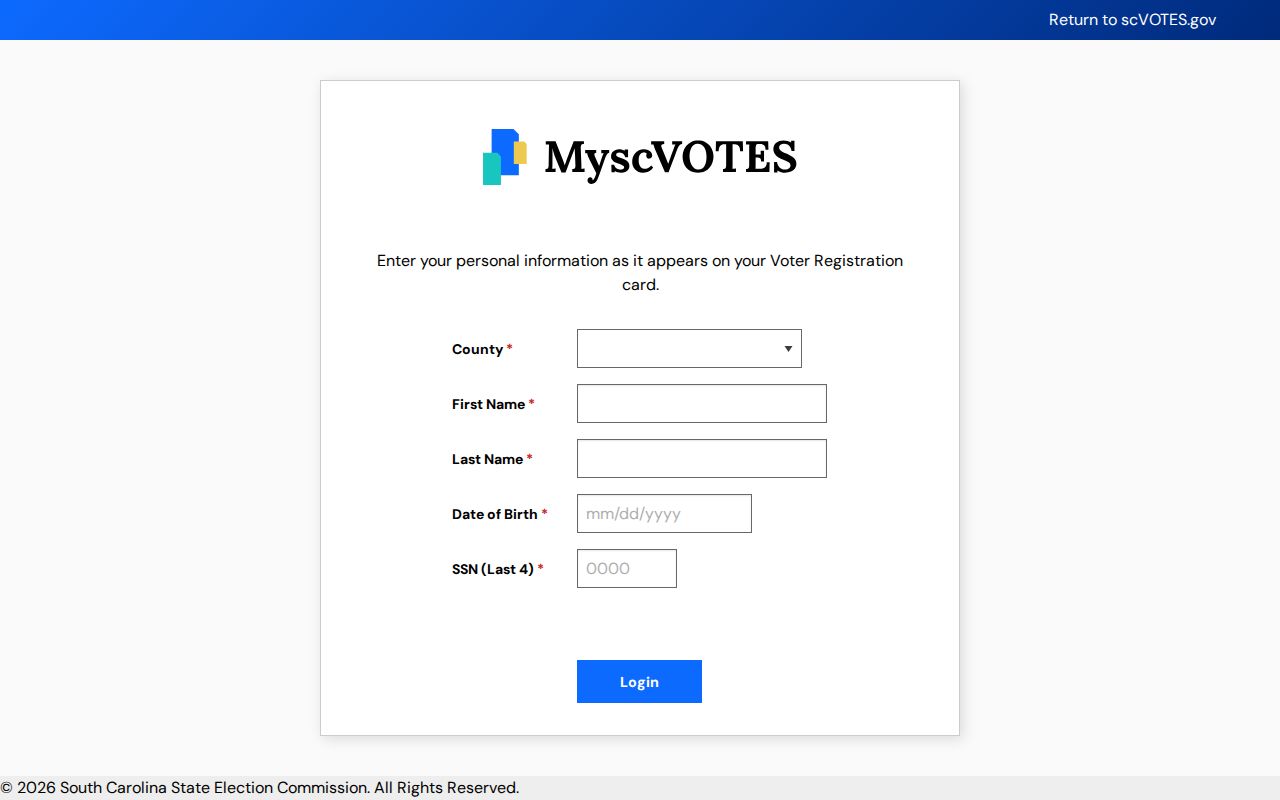
South Carolina sells registered-voter and participation data through a state order route and provides a custom-data-request path, but the inspected system does not publish a self-service street browser, price, or file specification. Historic sources are different: SCDAH lists Aiken voter registration books from 1882 to 1898 and precinct lists from 1896 to 1967, while Edgefield Archives organizes its historical records by record group.
North Augusta Cemetery Record Trail
Sunset Hill Cemetery is an unusual North Augusta family-history source because its city-held lot records can point to estate papers. The City Clerk holds lot-record information, while Parks, Recreation, and Leisure Services can assist with gravesite location. The City says its lots were sold long ago and that its record began with original purchasers. Later changes depend on documentation provided by a purchaser or inheritor, so the record can lag a transfer that was never reported.
A change may be supported by a transfer document, deed of distribution, certified will with letters testamentary for an older closed estate, court order, or in some situations an attorney title opinion or affidavit. That makes a cemetery-lot entry a useful prompt to check probate and deed material. It does not certify title or establish every family relationship. The Sunset Hill Cemetery record procedure identifies the city contacts and the transfer limits.
North Augusta Vital Record Windows
Vital records can confirm an event, but they are not a broad North Augusta resident directory. South Carolina Department of Public Health state birth and death records begin in January 1915. State marriage certificates begin in July 1950, while the county Probate Judge holds the local license route. State divorce reports begin in July 1962; the decree belongs with the county Clerk of Court where the divorce was final. Identify the event date and county before selecting a request channel.
Birth records become available for public viewing after 100 years. Death records become public after 50 years. Those periods do not turn every recent certificate into a general name search. For marriage, use DPH for the statewide certificate period or the Probate Judge in the licensing county for the license route. For divorce, use DPH for the report and the county clerk for the decree. The 100-year birth rule is in S.C. Code §44-63-80, and the 50-year death rule is in §44-63-84.
The South Carolina DPH Vital Records service provides current forms, office locations, and processing information. For older North Augusta family research, SCDAH and county archive collections can be the more appropriate route. An historic index, a statement of occurrence, and a certified certificate are different products with different access rules.
Historical North Augusta Resident Directories
Historical North Augusta resident directories often sit across the Savannah River in Augusta collections. That regional arrangement is supported by the National Archives list, which identifies Augusta volumes for 1929 and 1930 as including Hamburg and North Augusta. The place name on a historic entry may therefore be Augusta, Hamburg, or North Augusta. Compare the actual volume title, page, column, spelling, and abbreviation key before deciding that an entry concerns the same household.
The Georgia Heritage Room holds Augusta City Directory microfilm from 1841 to current, federal census microfilm from 1820 to 1930, local newspapers, and a directory catalog covering 1841 to 1939. Start with an approximate year, copy an entry exactly, then check the prior and next available volume. A directory supplies annual or semiannual address context; a census supplies household context; the county deed and probate chain can help test whether a property was owned, inherited, or merely a transaction situs. The wider collections method belongs in the North Augusta Directory Book.
Augusta Directories Include North Augusta
The cross-river directory connection is a practical North Augusta research advantage, not a substitute locality. The Georgia Heritage Room asks researchers to record the name, source, citation date, page number, and column. That practice makes it possible to return to the exact microfilm entry and compare it with a neighboring year. Use the exact address wording, spouse notation, initials, occupation wording if present, and the volume's own abbreviation key. Do not assume every directory includes every field or every resident.
The Georgia Heritage Room collection documents its microfilm holdings and local-history resources for the Augusta area.
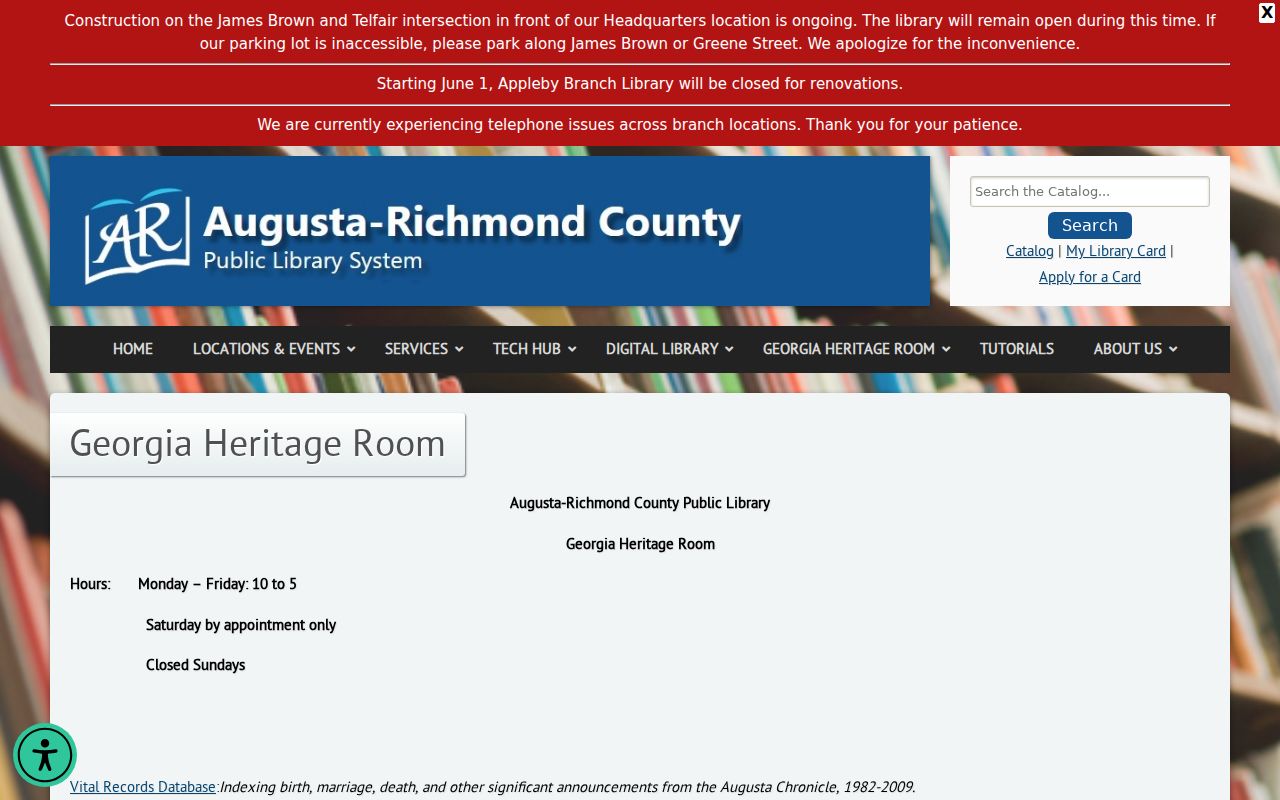
The National Archives directory list supplies the direct 1929 to 1930 North Augusta inclusion. When a later property trail stops, use the library microfilm, SCDAH county guides, or Edgefield archival research request rather than treating a missing online name hit as a final answer.
Note: Edgefield County Archives has no universal every-name index, so an older North Augusta search must select the record class first.
North Augusta Municipal Record Requests
North Augusta city records add a different layer to a residents directory search. Building Standards creates address-tied permit evidence, but no public search-by-address database was located. Use a specific street address, approximate project date, and department name when asking for an existing permit or code file. A permit can help date physical change. It does not establish who occupied a structure. Municipal Court likewise has a counter and case-information process, but no separate city name-search database was identified.
The South Carolina Freedom of Information Act is the fallback for existing nonexempt city or county records, not a request to build a new list of people. The City says its electronic form is voluntary and permits delivery by mail, fax, email, personal delivery, or the form. A focused request should identify the record type, address, date range, and city department. The North Augusta FOIA page is the city route for that process.
North Augusta Recording Alert Limits
Aiken County's free Recording Alert System is a useful North Augusta property-record safeguard for Aiken-side land. The county announced the service on July 15, 2025. A subscriber monitors a name with an email address and receives notice after a document containing that name is recorded. It does not block a forged or invalid document from being presented, and it does not guarantee prevention of recording fraud.
Use an unexpected notice to check the document reference and contact the appropriate county recording office through its independently verified number. Do not pay an unsolicited sender who claims to lock a title or provide a required deed copy. The Aiken County Register of Deeds explains the alert service and its recording role. Edgefield-side North Augusta parcels should be checked with the Edgefield Clerk and Register of Deeds instead.